
Equipment Downtime Causes: The Operational Blueprint to Eradicating Hidden Factory Losses – Copy
Walk onto any high-output manufacturing floor, and you can instantly feel the momentum of production. The mechanical hum of multi-axis CNC machines, the steady cycling of hydraulic presses, and the rhythmic sweep of automated material handlers create a symphony of industrial productivity. In this environment, every second represents throughput, and throughput represents profitability.
But when a machine suddenly stops, the silence that follows is devastating.
For plant managers and operations directors, industrial asset failure is a constant, looming threat. Unplanned asset failure doesn’t simply halt a single machine; it ripples across the entire value chain, causing cascading production delays, severely reduced operational efficiency, an immediate surge in direct repair costs, and missed delivery schedules. When shipments are delayed, customer relationships fracture, eventually culminating in severe, long-term financial losses.
The most frustrating part? The vast majority of these stoppages are entirely preventable. By digging deep into the primary equipment downtime causes early, engineering teams can intercept hidden wear patterns long before they escalate into catastrophic structural failures. Minimizing these operational blind spots is essential for maximizing machine reliability, optimizing production efficiency, and securing long-term operational performance across your entire facility.
What Is Industrial Equipment Downtime?
In simple terms, industrial equipment downtime refers to any period when a piece of production machinery is completely non-operational, bringing manufacturing activities to a halt. It is the time during which an asset is not performing its intended function, resulting in a direct drop in factory output.
To effectively combat this issue, a facility must classify its asset data into two distinct categories:
1. Planned Downtime
This refers to pre-scheduled, controlled periods where a machine is intentionally taken offline. It includes activities like routine preventive industrial maintenance, scheduled tool switchovers, software calibrations, and organized product changeovers. Because it is factored into the plant’s master schedule, its impact on production continuity is minimal.
2. Unplanned Downtime
This is the unexpected, disruptive enemy of factory logistics. It occurs when an asset abruptly breaks down due to a sudden mechanical fracture, electrical fault, technical anomaly, or operational error.
Because it happens without warning, unplanned downtime forces maintenance teams into a chaotic, reactive “firefighting” loop. It leaves operators stranded, completely derails day-to-day workflow scheduling, and incurs exponentially higher costs compared to scheduled upkeep.
Why Reducing Equipment Downtime Is Important
In modern, lean manufacturing setups, operational buffers are razor-thin. Minimizing machinery stoppages is no longer an internal shop-floor goal; it is a core financial necessity.
When an industrial line stops, the financial drain accumulates across multiple operational vectors:
1. Direct Financial Loss: Fixed overhead overhead costs—such as plant utility bills and facility rentals—continue to accrue every minute production stands still.
2. Workforce Inefficiencies: Highly skilled machine operators and assembly personnel are paid to wait around idling while a maintenance team troubleshoots a broken component.
3. Compounded Maintenance Overhead: Emergency procurement of replacement parts forces you to pay premium prices for rapid, next-day shipping and overnight specialized labor.
4. Supply Chain Degradation: Missing a critical client shipping window forces downstream logistical bottlenecks, damaging corporate reputation and risking severe contract penalties.
By actively working to reduce equipment downtime, plants build a more resilient business model. Eliminating unexpected halts directly improves global manufacturing efficiency, keeps machine performance at engineered specifications, and brings true stability to your industrial operations.

Common Causes of Industrial Equipment Downtime
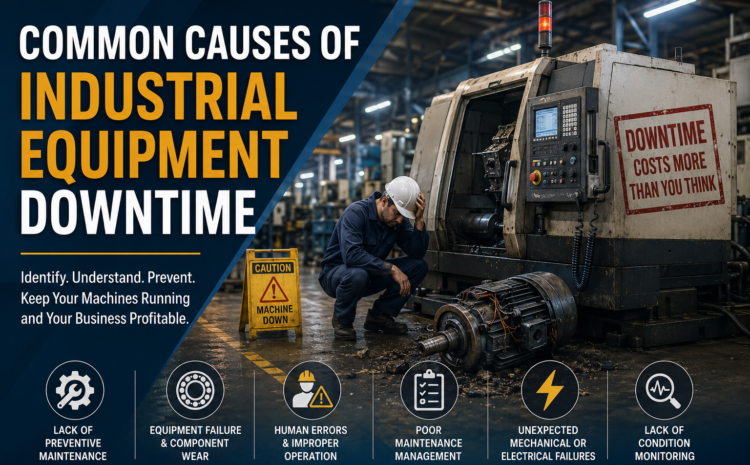
Eliminating asset failures requires an objective understanding of why they happen in the first place. Heavy machinery operates under punishing loads, high temperatures, and continuous cycles. The root equipment downtime causes can typically be traced back to a few critical operational gaps:
1. Lack of Preventive Maintenance
The fastest way to destroy an industrial asset is to run it blindly until it breaks. Neglecting routine care leads to rapid mechanical degradation. Skipping basic machinery inspections, ignoring scheduled oil changes, delaying filter replacements, and executing poor lubrication practices allow microscopic friction damage to expand into severe, permanent structural wear.
2. Equipment Failure and Component Wear
Every mechanical component has an engineered life expectancy. Under continuous, high-volume operation, parts naturally experience mechanical fatigue, thermal stress, and gradual material thinning. If aging equipment isn’t actively refurbished or managed, old bearings seize, drive belts snap, and hydraulic seals burst, leading to major equipment failure incidents.
3. Human Errors and Improper Operation
Even the most robust machine is at the mercy of its user. When floor personnel are poorly trained or rushed, they introduce significant risks. Operating a machine past its rated feed speeds, loading heavy workpieces incorrectly, neglecting proper axis homing protocols, or failing to clean away abrasive metal shavings can cause intense mechanical strain, fracturing delicate internal tooling and compromising machine reliability.
4. Poor Maintenance Management
A disorganized maintenance team guarantees high downtime. If an organization lacks structural maintenance tracking, skips historical failure documentation, or operates without a standardized maintenance checklist, failures repeat themselves. Without clear records, teams struggle to spot recurring patterns or order critical replacement parts ahead of time.
5. Unexpected Mechanical or Electrical Failures
Industrial equipment is a complex integration of heavy iron and delicate circuitry. Sudden, volatile voltage spikes, fried PLC boards, blown fuses, or unexpected internal motor windings shorts can instantly paralyze a machine. These causes of machine downtime are particularly difficult to diagnose without dedicated electrical testing infrastructure, driving up your urgent repair costs.
6. Lack of Condition Monitoring
Facilities that manage assets purely through visual checks miss the early warning signals occurring deep within the machine casing. Without specialized technical tracking—such as periodic vibration analysis or precision infrared temperature mapping—minor abnormalities go completely unnoticed until a catastrophic failure forces an unplanned stop.
Impact of Equipment Downtime on Manufacturing Operations
The consequences of manufacturing downtime causes extend far beyond a red light flashing on a machine console. It alters the entire financial and operational trajectory of a business.
[Unexpected Breakdown] ➔ [Idle Floor Workers] ➔ [Emergency Repair Costs] ➔ [Delayed Delivery] ➔ [Customer Churn]
When a plant experiences frequent, unexpected machine stoppages, the immediate result is lost production hours. To make up for lost output, managers are forced to authorize expensive overtime shifts, inflating total labor costs.
Furthermore, the rush to get machines back online often leads to sloppy, band-aid repairs, which reduces your baseline production efficiency and makes future breakdowns even more likely. Over time, the resulting erratic delivery performance strains customer relationships, erodes market trust, and severely depresses your overall business profitability.
Equipment Downtime Solutions and Prevention Strategies
Fortunately, moving a facility out of a cycle of constant breakdowns is entirely achievable. It requires a strategic combination of disciplined operations, organized scheduling, and modern technical tools.
Implement Preventive Maintenance Programs
The first step toward building a reliable floor is adopting disciplined, time- or runtime-based maintenance scheduling. By systematically stopping machines for brief, organized service intervals, technicians can replace consumable items, top off vital fluids, and inspect high-wear areas, neutralizing potential faults before they turn into emergencies.
Use Predictive Maintenance Technologies
To achieve maximum asset runtime, traditional schedules should be reinforced with modern predictive maintenance platforms. By tracking real-time asset telltales, engineering teams shift from rigid calendar guessing to precise, condition-driven fixes, addressing components exactly as they display early signs of internal degradation.
Improve Maintenance Scheduling
Successful maintenance management requires balancing production requirements with machinery preservation. Maintenance schedules should be integrated directly into the factory’s Enterprise Resource Planning (ERP) software. This ensures that servicing occurs during planned production lulls, preventing conflict between operations teams and maintenance technicians.
Train Machine Operators Properly
Your operators are your first line of defense against unexpected machine downtime. Providing comprehensive, hands-on training empowers floor personnel to run equipment safely within its engineered boundaries. Furthermore, teaching operators to perform basic daily cleaning and alignment tasks ensures that subtle operational shifts are flagged early.
Monitor Equipment Performance Regularly
Tracking overall asset performance metrics—such as Overall Equipment Effectiveness (OEE)—provides management with complete operational clarity. Continuously monitoring parameters like spindle runtime, cycle consistency, and idle tracking allows you to see exactly which assets are dragging down your manufacturing efficiency, letting you deploy engineering resources where they are needed most.
Role of Predictive Maintenance in Reducing Downtime
As manufacturing transitions deeper into the era of smart factory automation, the rise of Industry 4.0 has made predictive maintenance the premier defense against unplanned asset failures.
Driven by an interconnected web of industrial IoT (Internet of Things) hardware and cloud-based machine learning algorithms, these systems eliminate traditional technical blind spots. Instead of relying on manual clipboards, smart sensors are permanently attached to critical high-speed spindles and primary gearboxes to log microscopic changes in physical behavior.
By utilizing advanced software to run continuous, automated trend analysis, the system identifies the unique frequency signatures of sub-surface bearing pitting or minor motor insulation breakdown weeks before a physical failure occurs. This seamless union of industrial automation and real-time condition monitoring allows companies to extend their true equipment lifespan, optimize floor logistics, and achieve optimal workflow consistency.
Best Practices to Reduce Industrial Equipment Downtime
To instill a permanent, self-sustaining culture of asset reliability on your production floor, integrate these standard operational habits into your daily management:
1. Adopt a Root Cause Analysis (RCA) Process: Never settle for simply replacing a broken component. Every time a machine stops unexpectedly, require your engineering team to perform an RCA (such as the “5 Whys” methodology). Determine exactly why the part failed to ensure you modify your processes and prevent it from ever happening again.
2. Keep a Standardized Digital Maintenance Checklist: Eliminate loose paperwork. Transition your technicians to digital checklists run via tablet applications. This ensures every step of an inspection is logged, timestamps are recorded, and data is saved for future audit tracking.
3. Optimize Your Spare Parts Inventory: Identify your high-risk, long-lead components. Keeping critical sensors, specialized valves, and common seals in-house reduces your mean time to repair from several weeks to a few minutes.
4. Establish Clear Ownership: Assign specific technicians and operators to specific machine zones. When personnel feel a personal sense of ownership over the health of a particular asset, asset cleanliness and overall machine reliability improve dramatically.
Common Mistakes Industries Should Avoid
Even well-funded operations teams can experience high asset failure rates if they fall into these common strategic traps:
1. Relying Exclusively on Reactive Repairs: Waiting for a machine to completely smash itself to pieces before rendering service. This short-sighted approach guarantees maximum repair costs.
2. Ignoring Subtle Machine Warning Signs: Allowing operators to ignore strange grinding noises, minor fluid leaks, or small error codes just to keep an active production shift moving forward.
3. Postponing Service to Chase Short-Term Volume: Canceling a scheduled maintenance window to squeeze out an extra batch of parts. This practice always results in a severe, long-term breakdown that costs far more than the temporary output gain.
4. Neglecting Maintenance Documentation: Allowing technicians to perform repairs without logging what was changed or what root issue was observed, creating a total operational blind spot.
5. Failing to Upskill Floor Personnel: Buying advanced, multi-axis CNC machinery but failing to invest in modern technical training for the operators responsible for running it safely.
Final Thoughts
Industrial equipment downtime doesn’t have to be an accepted, frustrating cost of doing business. While physical machinery will always experience natural wear and friction, severe, unscheduled line stoppages are almost always a direct symptom of poor maintenance, missing information, and reactive management.
Moving your facility toward a predictable, high-output state requires a deliberate shift in strategy. By embedding systematic preventive maintenance, exploring smart predictive maintenance systems, and focusing on thorough operator training, you can protect your factory margins, elevate your baseline manufacturing efficiency, and keep your production lines moving forward seamlessly.
The future of industrial manufacturing belongs to operations that treat asset preservation as a core pillar of corporate strategy. If you are ready to explore the absolute pinacle of modern machining, heavy industrial automation, and advanced manufacturing systems, check out the live machine showcases hosted at Engi-Mach, India’s premier industrial engineering exhibition. To discuss your team’s machinery requirements or highlight your factory’s technical capabilities to a global audience, feel free to connect with our industrial consulting specialists and contact us at Engi-Mach today.
FAQ Section
What are the most common equipment downtime causes?
The most frequent culprits include a total lack of structured preventive care, natural component fatigue, operator error caused by poor training, messy or absent maintenance documentation, and failing to use modern sensor monitoring tools.
How can industries reduce equipment downtime?
Facilities can drastically lower failure rates by moving away from reactive mindsets and adopting structured maintenance scheduling, integrating continuous machine monitoring systems, upskilling floor operators, and optimizing their critical spare parts inventory.
Why is preventive maintenance important for industrial machinery?
Preventive care replaces unpredictable, expensive failures with brief, controlled service intervals. This systematic approach allows technicians to catch wear patterns early, reducing emergency repair bills and preserving asset precision.
What is predictive maintenance in industrial operations?
Predictive maintenance is a data-driven strategy that tracks live machinery health signatures through IoT sensors. By evaluating real-time vibration, thermal, and electrical changes, it accurately forecasts failures so repairs happen exactly when needed.
How does equipment downtime affect manufacturing efficiency?
Unplanned stops completely disrupt the natural flow of production. They create idle labor hours, force expensive overtime schedules to fix quotas, drive up emergency shipping costs for parts, and increase component scrap rates during hurried machine restarts.
What are the best ways to prevent machine downtime?
Focus heavily on building a proactive maintenance culture. Combine structured daily checklists for operators with automated condition monitoring tools, conduct thorough root cause audits after every failure, and never compromise scheduled maintenance for short-term production spikes.